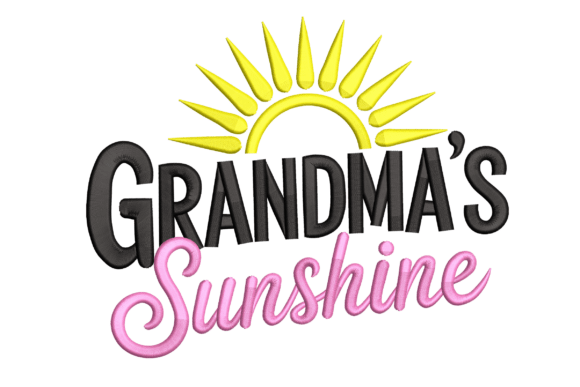
Grandma’s Sunshine: A Craft Fair Embroidery Review
As an experienced embroidery designer preparing for a weekend craft fair, I evaluate every machine embroidery design through the lens of production efficiency and booth appeal. When reviewing Grandma’s Sunshine, my immediate assessment focuses on its potential as a high-turnover craft fair product. Based on the title and description, this design projects a warm, affectionate, and bright aesthetic that aligns perfectly with the sentimental nature of handmade gifts. It does not feel overly formal or stiff; rather, it suggests a cheerful, approachable style that resonates deeply with customers shopping for grandparents. For an Etsy seller or boutique maker, this emotional connection is the primary selling point, but as a producer, I must ensure the technical execution matches that sentiment.
Visual Impact and Booth Display Strategy
The first impression of Grandma’s Sunshine dictates where it belongs in my market display. The phrase implies warmth and positivity, suggesting a color palette of yellows, golds, soft oranges, or warm neutrals. In a physical booth setting, this design serves as an excellent "stopper." Customers browsing quickly are drawn to legible, heartwarming text combined with sunny motifs. Unlike complex scenic designs that require close inspection, this concept reads clearly from three feet away, which is crucial for capturing foot traffic.
For visual merchandising, I would position items featuring Grandma’s Sunshine at eye level. The design likely balances typography with decorative elements, making it versatile enough to serve as either a central focal point or a complementary accent. If the design includes intricate sun rays or floral borders, it adds perceived value to simple blanks. However, if it relies heavily on script font, readability becomes paramount. As a small shop product, it needs to communicate "gift-ready" instantly without requiring the customer to decipher tiny stitching.
Best-Selling Product Applications
Determining the right blank is half the battle for any handmade product. Based on the affectionate theme of Grandma’s Sunshine, here is how I evaluate specific applications for commercial viability:
- Tote Bag Design: This is arguably the strongest application. Canvas totes provide a stable, flat surface ideal for text-based embroidery. A tote bag featuring this design appeals to grandmothers who want a functional item for library visits, farmers markets, or carrying grandchildren's toys. The large hoop area allows the design to shine without distortion.
- Tea Towel Embroidery: Kitchen linens are staple craft fair sellers. Grandma’s Sunshine works beautifully here because tea towels are often gifted specifically to grandmothers. The key is ensuring the design placement accounts for folding; the message should remain visible when the towel is hung or folded in thirds.
- Apron Embroidery: For the baking grandmother, this design adds a personalized touch to utility wear. Aprons offer a generous embroidery field, allowing for larger sizing. However, one must account for the curve of the bib and the potential for fabric shifting during wear.
- Embroidered Patch: Creating patches is a fantastic way to maximize machine runtime. Patches allow customers to customize their own denim jackets or caps later. Grandma’s Sunshine translates well to patches if the border is clean and the internal details are bold enough to survive being sewn onto textured denim.
- Caps and Hats: Proceed with caution. While caps sell well, curved surfaces can distort lettering. Only use this design on caps if it has been specifically digitized for headwear with proper compensation. Otherwise, stick to flat-brim trucker hats or bucket hats where the embroidery field is flatter.
Production Practicality and Batch Efficiency
For commercial embroidery businesses, time is money. I evaluate Grandma’s Sunshine based on repeatability. Does the design allow for multi-hooping? Can I run six tea towels in succession without excessive repositioning? Text-heavy designs with consistent spacing are ideal for batch production. If the design features variable element placement, it slows down workflow significantly.
Photographing for online listings requires equal consideration. Bright, sunny designs can sometimes wash out in photos if lighting isn't balanced. When creating a printable mockup or listing photo, ensure the thread colors contrast sufficiently against the fabric background. Yellow thread on white fabric, while thematic, often disappears in digital thumbnails. I recommend testing navy, charcoal, or slate backgrounds to make the "sunshine" elements pop in Etsy search results. Real-world samples always photograph better than digital renders for this category, as buyers want to see actual stitch texture.
Critical Technical Considerations
Even the most beautiful digital embroidery file can fail if technical parameters aren't respected. Before committing Grandma’s Sunshine to inventory, consider these production realities:
- Stitch Density: Check the fill areas. If the sun motif uses dense satin stitches, it may cause puckering on lighter weight fabrics like quilting cotton. Ensure appropriate underlay is present to stabilize the fabric before top stitching.
- Small Lettering Risks: If the design includes secondary text (e.g., "Est. 2024" or a name), verify the minimum height. Machine embroidery struggles with serifs or thin lines below 5mm. If the details are too fine, they will get lost or cause thread breaks during high-speed production.
- Fabric Texture Compatibility: Terry cloth towels and waffle-weave fabrics have high pile. Using standard stabilizer might result in stitches sinking into the texture. Always use a water-soluble topping to keep Grandma’s Sunshine crisp and legible on textured surfaces.
- Hoop Size Verification: Never assume your hoop fits the design with adequate margin. Measure the actual stitch field in your software. Running a design too close to the hoop edge increases the risk of flagging or misalignment, ruining expensive blanks.
Designer Notes for Quality Assurance
Before listing any finished product featuring Grandma’s Sunshine, professional due diligence is non-negotiable. First, always test stitch the embroidery file on scrap fabric identical to your final product. Digital previews do not show tension issues or registration errors. Second, review your stabilizer choice. Cutaway stabilizer is generally superior for knits and stretchy fabrics, while tear-away suffices for woven canvas totes. Third, confirm commercial licensing. Just because you purchased the design assets does not automatically grant unlimited production rights for physical goods. Protect your business by verifying terms.
Finally, consider thread color fastness. Items meant for grandmothers, especially kitchen textiles and tote bags, will be washed frequently. Use polyester or high-quality rayon threads rated for colorfastness. Fading yellow thread turns a premium handmade product into a disappointment after two wash cycles. By addressing these technical and practical elements, Grandma’s Sunshine transforms from a cute digital file into a reliable, profitable staple for your craft fair table and online shop. The combination of emotional resonance and technical excellence is what ultimately drives sales in the competitive embroidery market.