Happy Day: A Designer Review for Business Merch
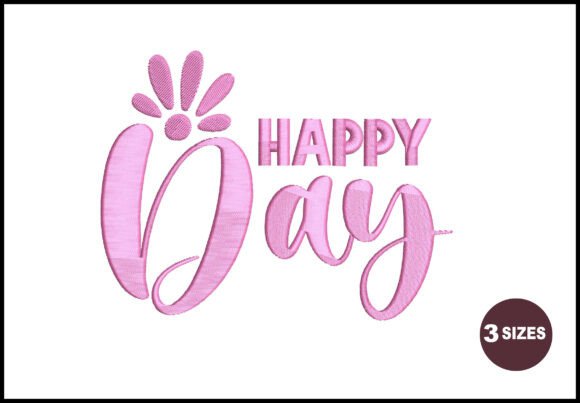
As an embroidery designer who regularly consults with small businesses on branded merchandise, I approach every new machine embroidery design with a critical eye toward production viability and brand alignment. When evaluating the "Happy Day" inspirational design, my first impression is one of approachable professionalism. The combination of script and block lettering suggests a balance between warmth and legibility that is essential for commercial use. For a local café, boutique, florist, or creative studio, this aesthetic bridges the gap between handmade charm and established business credibility. It does not look like generic clip art; rather, it feels like a deliberate typographic choice intended to evoke positivity without sacrificing readability at a distance.
Evaluating Typography for Commercial Brand Identity
In the world of custom apparel and small business merch, typography is often where designs succeed or fail. The "Happy Day" design utilizes a mixed-font strategy that I frequently recommend to clients. Block lettering provides the structural anchor necessary for quick recognition on moving targets like staff uniforms or passing customers. Meanwhile, the script element adds the personality required for lifestyle brands, bakeries, and pet shops. This duality makes the embroidery file versatile enough for multiple touchpoints within a single brand ecosystem.
For a bakery or coffee shop, this design communicates freshness and friendliness. For a creative studio or Etsy seller, it signals a personal touch that mass-produced competitors cannot replicate. However, as a designer, I must emphasize that the success of this mixed typography relies entirely on proper digitizing. The transition points between the block letters and the script must be smooth to prevent thread breaks or registration issues during high-speed commercial embroidery runs. Before committing to bulk production, always verify that the digital embroidery file maintains clear separation between these two distinct font styles.
Real-World Applications: From Aprons to Patches
The true test of any inspirational embroidery design is its adaptability across different substrates. Based on the visual weight and composition of "Happy Day," I see several high-value applications for business owners.
- Apron Embroidery: This is perhaps the strongest use case. The design’s cheerful tone pairs perfectly with the functional nature of an apron. On a canvas or denim apron, the mix of fonts creates a focal point at chest level that serves as both branding and a conversation starter with customers.
- Embroidered Patch Production: For businesses wanting flexibility, this design translates well into merrowed-edge patches. The block lettering ensures the text remains readable even when scaled down to a 3-inch diameter. Patches allow staff to wear branded gear on personal jackets or caps, extending your brand identity beyond company-owned uniforms.
- Tote Bag Design: Canvas totes are a staple for boutiques and markets. "Happy Day" offers sufficient coverage to justify the perceived value of the bag as a premium gift-with-purchase or retail item. The design’s positive sentiment encourages reuse, turning customers into walking billboards.
- Cap Embroidery: While possible, cap fronts require careful evaluation. The horizontal spread of script and block text must fit within the limited vertical height of a structured cap front. If the design is too wide, it will distort on the curved surface.
Technical Considerations and Production Risks
While the aesthetic is sound, technical execution determines the longevity of the finished product. As a professional, I advise testing specific variables before running full batches of commercial embroidery.
Stitch Density and Fabric Texture
Mixed-font designs can present density challenges. Script lettering typically requires satin stitches, while block letters may use fill or running stitches depending on size. If you are embroidering on textured fabrics like terry cloth towels or ribbed knit shirts, the thinner elements of the script in "Happy Day" risk getting lost in the pile. In these scenarios, using a water-soluble topping stabilizer is non-negotiable to keep the lettering crisp. Conversely, on lightweight performance wear, excessive stitch density in the block letters could cause puckering. Always match your stabilizer choice to the specific garment weight, not just the design itself.
Sizing and Legibility Thresholds
There is a minimum viable size for this specific design. Because it features intricate script details alongside block text, reducing it below a certain width will cause the script loops to merge or the block letters to become illegible blobs. I strongly recommend creating a printable mockup at actual size and taping it to the intended garment location. Step back five feet. Can you still read "Happy Day"? If not, the design is too small for that application. Do not rely solely on screen previews; physical scale checks prevent costly rework.
Thread Color Contrast Strategy
The interplay of thread colors defines the hierarchy of this design. For maximum impact, consider using contrasting colors for the script versus the block text. For example, a navy block letter base with a gold script accent creates depth and guides the eye. However, if you are producing handmade product labels or subtle branding, tonal embroidery (e.g., white on cream) offers a premium, understated look. Just ensure the contrast ratio remains high enough for accessibility and visibility in low-light retail environments.
Strategic Value for Small Business Growth
Investing in quality design assets like "Happy Day" is about more than decoration; it is about building customer trust. Consistent, well-executed embroidery signals attention to detail. When a customer sees a clean, vibrant logo on a barista’s apron or a shop owner’s tote, they subconsciously associate that quality with the products being sold. Sloppy embroidery implies sloppy business practices.
Furthermore, this inspirational theme serves as an emotional hook. In an era of sterile corporate branding, small businesses win by being human. "Happy Day" acts as a micro-interaction that softens the transactional nature of commerce. Whether used on packaging accents, thank-you cards attached to orders, or staff uniforms, it reinforces a culture of care. This emotional resonance increases buyer engagement and fosters loyalty in ways that generic logos cannot.
Designer’s Pre-Production Checklist
Before you load this embroidery file into your machine for client work, complete this verification process:
- Verify Licensing: Confirm the license terms explicitly permit commercial use on merchandise for sale. Personal use licenses do not cover branded business assets.
- Check Hoop Size Compatibility: Ensure the design dimensions fit comfortably within your available hoop size with adequate margin for stabilization. Never hoop to the absolute limit.
- Run a Black and White Test: Stitch the design in a single color first. This reveals registration errors or spacing issues that multi-color stitching might hide.
- Inspect Spacing and Kerning: Look closely at the junction where script meets block letters. If gaps are too wide or overlaps are messy, edit the file or request a corrected version before production.
- Test on Actual Substrate: A test stitch on scrap muslin is insufficient. Test on the exact fabric, with the exact stabilizer combo, intended for the final run.
- Create Client Mockups: Use realistic digital mockups to get sign-off on placement and size. Clients often underestimate how large or small embroidery appears in real life.
- Wash Test: If the item will be laundered frequently (like aprons or uniforms), wash and dry the test sample three times. Check for thread shrinkage, color bleeding, or stabilizer residue.
"Happy Day" represents a strong opportunity for businesses seeking to infuse their merchandise with genuine warmth. By treating it as a professional asset rather than just a cute graphic, and by adhering to rigorous production standards, you can transform this inspirational design into a powerful tool for brand recognition and customer connection. Always prioritize technical integrity over speed, and your embroidered merchandise will reflect the same quality and care that defines your business.