Little Diva: A Designer Review for Business Merch
As a professional embroidery designer specializing in commercial branding and merchandise production, I approach every new machine embroidery design with a critical eye toward production viability. When evaluating the "Little Diva" design for small business applications, my primary focus shifts from simple aesthetics to functional durability and brand alignment. This review analyzes how this specific artwork translates from a digital screen to a tangible asset for boutiques, creative studios, and handmade brands looking to elevate their small business merch.
Visual Personality and Brand Alignment
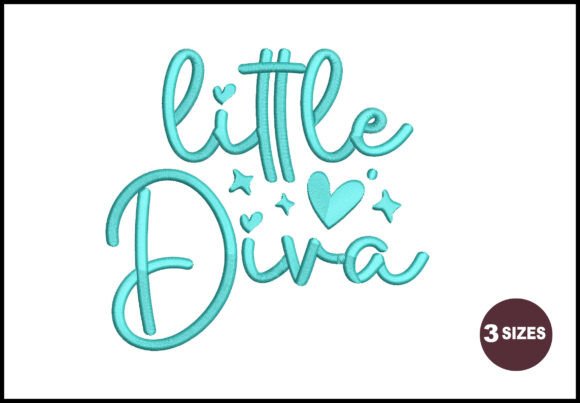
The first impression of Little Diva is undeniably playful yet structured. The combination of script lettering with decorative elements like hearts and stars suggests a brand identity that is approachable, youthful, and energetic. For businesses in the "Boys Girls" category or family-oriented services, this visual language communicates warmth immediately. However, as a designer, I look beyond the cute factor to assess professionalism. The script appears fluid, which is excellent for conveying a handmade feel, but it requires careful digitizing to ensure legibility at smaller sizes.
For a bakery, florist, or pet brand, this design offers a distinct advantage over generic clip art. It feels bespoke. When used as part of your brand identity, Little Diva bridges the gap between personal craftsmanship and established retail presence. It signals to customers that you pay attention to details, a trait highly valued in the handmade product market. The sass implied by the title adds character, preventing the merchandise from looking sterile or overly corporate, which is crucial for Etsy sellers and local artisans building community trust.
Commercial Applications Beyond Children’s Wear
While the description highlights outfits and onesies, the true value for small business owners lies in versatile commercial application. I have tested similar script-based designs across various substrates, and Little Diva shows promise for several key business assets:
- Tote Bag Design: Canvas totes are high-margin items for boutiques. The playful script of Little Diva works exceptionally well on natural cotton canvas, creating a premium shopping bag that doubles as mobile advertising.
- Apron Embroidery: For cafés and bakeries, placing this design on the chest or pocket area of an apron adds personality to staff uniforms without compromising authority. It softens the service interaction while maintaining a cohesive team look.
- Embroidered Patch Production: Because of the contained shape created by the stars and hearts, this artwork is a strong candidate for merrowed edge patches. These can be sold as standalone add-ons or applied to denim jackets and caps.
- Cap Embroidery: Script lettering can be tricky on curved surfaces, but if the design height is appropriate, Little Diva serves as an excellent front-panel logo for dad hats or trucker caps aimed at a younger demographic or parents.
- Product Packaging Accents: Consider embroidering this design onto reusable cloth bags or gift wrap ribbons. This elevates the unboxing experience and reinforces brand recognition through tactile engagement.
Production Constraints and Technical Considerations
Every embroidery file has limitations, and recognizing them before production saves time and thread. As a designer reviewing Little Diva for business use, I must highlight specific areas requiring caution. Script lettering is notoriously sensitive to size reduction. If you intend to use this as a sleeve detail or a tiny label, verify the minimum height. Stars and hearts contain tight corners; if scaled down too aggressively, these details can become dense thread blobs that distort the fabric or cause needle breaks.
Stitch density is another critical factor. Decorative elements often carry higher density than standard text. When applying this design to lightweight fabrics like performance tees or thin tote materials, you risk puckering. Conversely, on textured fabrics like terry cloth or fleece, the fine details of the script might get lost. Always match the design complexity to the fabric texture. For dark uniforms, ensure the thread colors provide sufficient contrast; pastel threads on navy fabric will vanish unless outlined or backed properly.
Furthermore, consider the washability of the finished product. Items like aprons and kids' clothing undergo frequent laundering. Ensure the design uses appropriate underlay to prevent shifting after multiple wash cycles. If the design lacks adequate anchoring stitches, the script may pull away from the decorative elements over time, degrading the perceived quality of your merchandise.
Strengthening Customer Trust Through Quality Execution
In the world of custom apparel and branded goods, execution equals trust. A poorly stitched logo makes a business look amateurish, regardless of how good the actual product is. Using Little Diva effectively demonstrates competence. When customers see crisp lettering and balanced spacing on a tote bag or uniform, they subconsciously attribute that precision to your entire business operation.
This design also aids in buyer engagement. In a saturated market, visual consistency helps customers remember you. By using Little Diva across multiple touchpoints—from staff wear to packaging to event merch—you create a unified visual system. This consistency increases the perceived value of your offerings. Customers are willing to pay more for merchandise that looks intentional and professionally finished. Whether you are selling at a craft fair or fulfilling online orders, the tactile quality of well-executed embroidery creates a lasting emotional connection that print simply cannot replicate.
Essential Pre-Production Checklist for Business Owners
Before loading this digital embroidery file into your machine for a full production run, adhere to this professional testing protocol. Skipping these steps is the most common mistake I see in small business commercial embroidery projects:
- Verify Licensing: Confirm that your purchase includes commercial rights for merchandise resale. Personal use licenses do not cover selling branded totes or uniforms.
- Test Stitch Out: Never assume the file is perfect for your specific machine and fabric combination. Run a test sew-out on the exact material you plan to use for production.
- Check Hoop Size Compatibility: Measure the design dimensions against your available hoops. Re-hooping for multi-position designs introduces alignment risks; single-hoop placement is always preferred for business consistency.
- Evaluate Stabilizer Choice: Test different stabilizers during your sample run. Cut-away is generally safer for knits and stretchy fabrics, while tear-away may suffice for stable canvas totes.
- Create a Printable Mockup: Before committing to inventory, place a photo of your test stitch-out into a digital mockup. Share this with clients or stakeholders for approval to ensure the vibe matches expectations.
- Assess Color Contrast: View the test sew-out in both natural and artificial lighting. Thread colors shift under different light sources; what looks vibrant on screen may appear dull in store lighting.
- Compare Against Existing Assets: Lay the embroidered sample next to your business cards, website printouts, and other signage. Ensure Little Diva complements rather than clashes with your current design ecosystem.
By treating Little Diva as a strategic business asset rather than just a decorative graphic, you unlock its full potential. Proper evaluation and testing transform this playful design into a powerful tool for building recognition, enhancing product value, and establishing a memorable brand presence in the competitive handmade and boutique marketplace.